
Neonatal Encephalopathy: Statewide Education and Quality Improvement
NPQIC works to improve early detection and management of hypoxic-ischemic encephalopathy (HIE), a condition affecting between 1 and 8 of every 1,000 live-born infants. Therapeutic hypothermia, or "cooling," remains the only proven treatment, but access to timely care still varies depending on where a baby is born, and each year newborns in Nebraska miss the critical window for treatment.
From 2019 to 2024, NPQIC housed the Midwest Neonatal Encephalopathy Registry (NER), a multi-site collaboration across five facilities in Nebraska and Iowa. Funded by COPIC, the registry enrolled over 500 infants and helped identify barriers to hypothermia therapy, monitor deviations from care guidelines, and track survival and neurodevelopmental outcomes across the region. Enrollment has since closed, though outcome data collection continues through 2026, when complete neurodevelopmental outcomes for enrollees will be available.
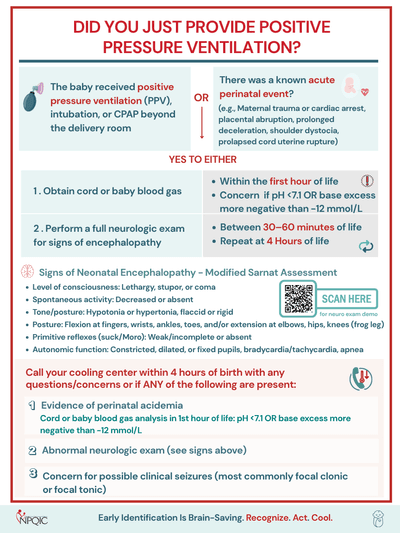
In 2025, gaps in early HIE recognition across the state highlighted the need for broader education. NPQIC created a delivery room poster as a quick-reference guide for providers, featuring a QR code linking to a demonstration video of a neurologic exam. The poster highlights key actions during critical moments, including:
- Recognizing when to obtain cord or early newborn blood gas analysis
- Performing timely neurologic assessments using modified Sarnat criteria
- Identifying clinical signs of neonatal encephalopathy and seizure activity
- Knowing when to contact cooling centers within the critical 4-hour window
Project Resources
Initial Assessment and Screening for Neonatal Encephalopathy Algorithm, 2024 (Children's Nebraska)
What to Do if an Infant Qualifies for Therapeutic Hypothermia: Passive Cooling, 2024 (Children's Nebraska)


